
Posts Tagged ‘Trailer’

Why a tiny home?

April 2nd, 2020

Towards the end of 2018 I started looking into the potential purchase of a tiny home. I decided to go with a tiny home for a number of different reasons.

I rarely travel. Tiny homes are mobile, though, not nearly as mobile as R.V.’s.

I don’t own property. Rent at R.V. parks and campgrounds is the most affordable.

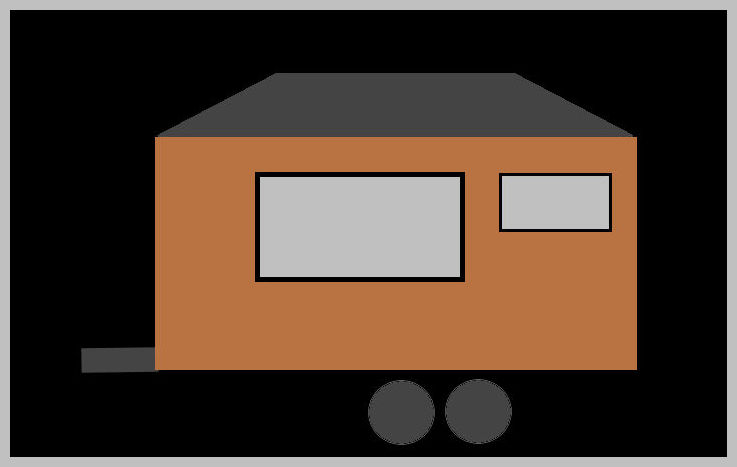
I’m not wealthy. At the time of the purchase, I couldn’t afford either a tiny home or an R.V., no less an apartment. Nevertheless, I was able to purchase a trailer with the potential framework of a tiny home. 

From there, I looked towards the future. I thought about the possibility of parking the home on a small plot of land. However, as I write this article today, that possibility looks less and less likely.

Many areas have strict zoning laws, restricting what an individual is aloud to keep on his or her own land. Finding a suitable plot of land might be difficult.

Property prices have been rising, and rising quickly. The current cost of land is a major hurdle to overcome.

Tiny homes are often pet friendly. I have an older cat and wanted her to have a decent living environment. 

Originally, I learnt about tiny homes back in 2016 via HGTV. They seemed interesting, unique, and an inexpensive way to own a home. In some cases, the only way to own a home, during an era where those on fixed incomes and the working poor have been forgotten or simply dismissed.

I started doing additional research online. I watched videos and visited different websites geared towards tiny homes. Those websites along with HGTV offered plenty of inspiring ideas.

Within a few months of owing the trailer, I started building the interior. With each day of work, the idea of a tiny home instilled a greater impression. They are very customizable. They’re a blank canvas with endless possibilities.

Even though they are tiny in size, with a little creativity, they don’t always feel tiny. A table that slides under a counter, when not in use, offers additional space to the living area. Stairs that double as storage and fold away furniture are a few other ways to turn a small space into a larger space.

Moreover, tiny homes allow their owners to live off grid. Solar systems have become very affordable, if designed properly. They can provide power at any time, at any place.

Rainwater harvesting systems are available to collect and store water in certain areas. In other areas, a combination of water storage tanks and water filters provide clean drinking water for many months.

The footprint of a tiny home is very environmentally friendly. Composting toilets turn waste into mulch and recycled materials are available to use as building supplies.

The tiny home I’m building still has a long ways to go before it’s finished. I’m on a limited budget. Yet, with each year that passes, I’m able to make a few upgrades.

Even at it’s current stage, it is now very livable. If all goes according to plan, by the end of the year, the trailer should have another round of minor improvements. Then, next year, the same. Eventually, this trailer should have some semblance of a tiny home.


Additional Information: The idea for a slide out table was from the following YouTube video: Living the Vanlife as Digital Nomads in a VW Westfalia.
Evolution Of The Internet

June 16th, 2014

This 1990’s commercial got me thinking about the early days of the internet. I’ve been fascinated with the net for as long as I could remember. I figure because the world wide web is so vast I liked it for different reasons at different times in my life. It’s somewhat funny watching this today, not only because the video itself has some funny parts, but also because most of what’s talked about is second nature for so many of us. It seems like much of what’s said is relevant today. Meaning the infrastructure of the internet hasn’t changed all that much since it was first introduced.

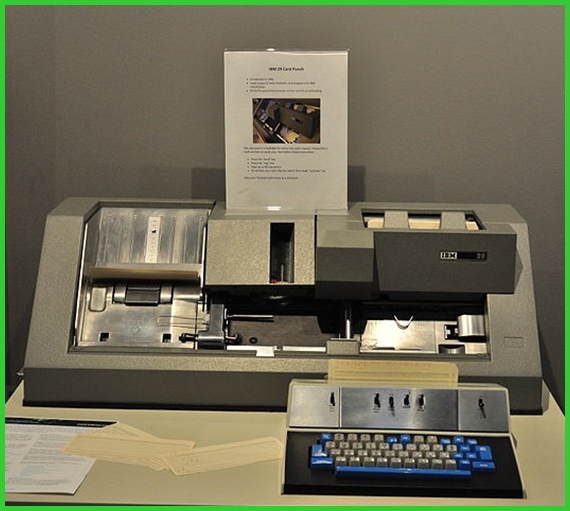
Considering I’m in my 40’s, I feel lucky to have been around the net since it was first introduced in the early 1990’s. My father started working as a computer operator in 1965 and later switched to programing in the mid 1970’s. Back then there were no home computers and only larger companies used computers. These were gigantic mainframe computers used for data storage and manipulation. They were so large they literately took up an entire room. Computer programs weren’t typed into the first computers like they are with today’s computers. Programers would write the program out via longhand onto a coding sheet and afterwards they would be typed into a Keypunch Machine. The Keypunch Machines would print the program onto a small rectangular manila index card via punching a series of little square holes into the card. The cards would then be inserted into the mainframe computer, which would be able to read the cards and convert the information into a language it understood. From there the computers would perform the task as originally designed by the program. Since these computers only had 12,000 bytes of memory and no hard drive, data was stored on large tape drives. The tape drives looked like giant movie reels from the 1940’s. And to put the 12,000 bytes of memory they contained into perspective – 1 megabyte of data has 1,048,576 bytes. These gargantuan computers didn’t even have enough memory to store one decent sized jpeg image. Looking back I figure my fathers background with computers played a large part as to why we ended up having access to the internet at an early stage.

The first ISP we used was from a provider called GNN (Global Network Navigator). It was introduced shortly before AOL and had many similar features including the channels on the home area. We ran GNN on a 386 PC with a 14.4 modem. By today’s standards the modem and PC were as slow as dirt, but back then that wasn’t something of concern. Using even the slowest computer / modem combo for e-mail and research was much faster than driving to the Library or hand writing a letter. Prior to the PC we had a TI99 and a Commodore 64. Both of those computers were kept in our basement. Somehow I managed to talk my parents into letting me keep the PC in my room. I was ecstatic just to be able to experience the world wide web. However, once I discovered chat rooms shortly thereafter I had a new infatuation. I remember when I first came across the GNN chat rooms. I thought they were the greatest thing imaginable. The chat section(s) were basically one long chat room with hundreds of people from all over the world. They also moved very fast. I discovered them one night before I went to bed. The next morning I skipped school and talked online all day. I was infatuated with this whole new world and couldn’t pry myself away. I grew up in a small town and there were people from all over the world in these chat rooms. Plus, I was a somewhat quite kid so it seemed like a great way to meet girls. Even if at that age I would never have the opportunity to meet them in person.

Even though the infrastructure of the net is very much the same there are many differences between today’s internet and the one of days past. Altavista, mentioned in the video was the go to search engine at the time and my favorite. Altavista is now gone with the wind and has been for a while. AOL also mentioned has changed drastically. For me, its hard to believe. Both were extremely popular during the early 1990’s. Although, AOL would give me fits when the connection would drop. I remember playing 24 hour Slingo tournaments. Slingo was a slot-like game offered through AOL. It was very similar to the Facebook games of today. They would have 24 hour tournaments where players would compete against others online. Players would have to stay up for 24 hours playing contentiously to obtain the highest score. Apparently, there were others crazy enough and determined enough to play the game for 24 hours straight because I never won a tournament. As with GNN, AOL had chat rooms but they were a little different. AOL had hundreds of different rooms. There was one for just about everything. And they usually contained plenty of people chatting away. This was cool because you could find chat rooms that matched your interests or even your location. And as with GNN I spent hours upon hours trying to meet girls in the chat rooms via AOL. Though, this time a bit older, a teenager, a bit naive but determined that the gal for me was waiting in one of those rooms.

Now the internet is a way of life. A life where people couldn’t possibly imagine living without such a luxury. Sure, Altavista is gone, AOL is only a microcosm of its former self. Myspace users migrated to Facebook. All but the most diehard LiveJournal users switched to Blogger and WordPress. Netscape Navigator is caput. Free website hosts/builders like Geocities, Tripod, Angelfire and Fortunecity don’t really exist. Today you have Blogger, Tumblr and Facebook as the popular options. Users of Peer-to-peer sites like Napster and Limewire have moved on to Torrent clients like PirateBay, uTorrent and Bitcommet. Chat rooms I’m sure still exist, but are not nearly as popular as they were in the 1990’s. IRC and AOL chat rooms were the most popular at the time, but I’m not even sure if they’re still around. And really I wouldn’t even know where those users migrated, maybe Myspace along with other social media sites like Facebook, Hi5 or Twitter. I figure some even switched to texting platforms like WhatsApp. Furthermore, one of the nets biggest changes is with video. Due to faster connections videos, television and movies have become extremely popular.

With so much changed there are some websites that thrived or at least survived over the last 20 years of cyberspace. eBay has had many ups and downs, but is relatively the same and in no danger of changing or going anywhere soon. Yahoo! is always evolving, but its main feature is still data searches. However, I have to say I miss the Yahoo! magazine and auctions. Aint-It-Cool-News, a smaller website I first started visiting back in the 1990’s is still run by the same owner and with very much the same idea as when first launched. Plus, the very heart of the internet, the infrastructure, is almost identical from when it was first introduced. All web address still start with http:// (HyperText Transfer Protocol). Domains typically start with WWW (World Wide Web) and the combination of the three (http, www and domain name) is still the URL (Uniform Resource Locator). The World Wide Web is still accessed via web browser. Web browsers basically convert programing languages to the graphics / design you see on websites. HTML and PHP have evolved a bit from earlier days, but are currently widely used programing languages. Though, they are slowly loosing ground to newer languages such as Ruby and Python.

With technology always evolving one never knows what the future holds, especially with mobile platforms becoming increasing popular. But for now the main idea of the internet is relatively the same as when first introduced in the 1990’s. For many of us its hard to believe that was over 20 years ago.

IBM 029 Card Punch Data Recorder Keypunch Machine

This is an old IBM 029 Keypunch Machine with some punch cards. – Image by Joe Mabel via Wikimedia Commons.

* Additional Notes: The above video isn’t of the complete internet commercial. The original is about thirty minutes and can be found on Youtube.